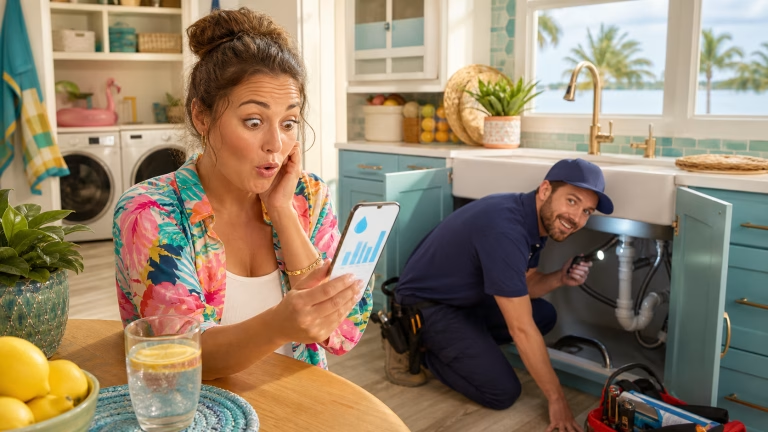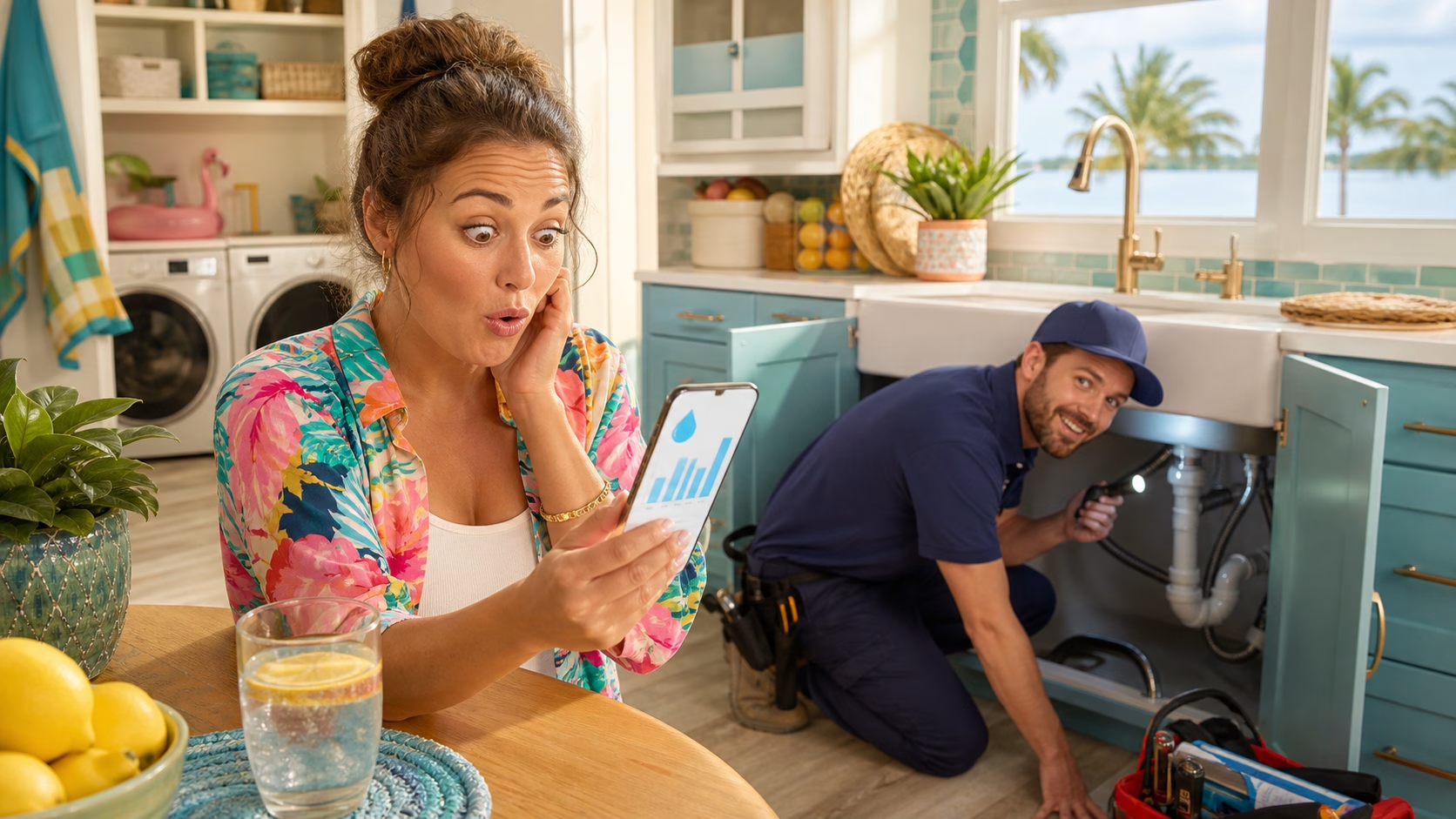
Ever opened your JEA bill and immediately checked it twice because the number seemed impossible?
You haven’t filled a pool. Your sprinklers are running on the same schedule they always have. Nobody’s washing cars in the driveway every day. So why is your water bill suddenly $200 higher than last month?
The answer is probably hiding somewhere in your walls, under your slab, or behind a cabinet you haven’t looked behind in years. You’ve got a leak, and in Jacksonville, where most homes sit on concrete slabs with pipes running under floors and behind walls, these leaks have plenty of places to hide and do damage before you ever see a drop of water.
By the time you spot a damp spot on the ceiling or notice that musty smell in the hallway, the leak has been there for weeks—sometimes months. The water bill has been climbing. The damage has been spreading. And what started as a small problem is now a big one.
Let’s talk about what’s really happening behind your walls, how to catch these leaks early, and what you can do before that “minor drip” turns into a major disaster.
Why Jacksonville Homes Are Leak Magnets
Jacksonville homes deal with a perfect storm of leak-causing factors that other parts of the country don’t face quite the same way.
Our combination of challenges:
Slab Foundations: Most Jacksonville homes are built on concrete slabs, which means pipes run underneath your floors. When those pipes leak, the water has nowhere to go but sideways—spreading under your flooring, soaking insulation, and creating damage you can’t see until it’s extensive.
Florida Humidity: Our year-round moisture means pipes corrode faster, especially copper pipes in certain soil conditions. The outside of pipes can deteriorate just as quickly as the inside.
Sandy Soil: Sounds harmless, but sandy soil shifts and settles. This movement puts stress on rigid pipes under slabs, especially at joints and connections. Over time, these stress points crack.
Hard Water and Minerals: Jacksonville’s water isn’t the hardest in Florida, but it has enough mineral content to cause buildup inside pipes over decades. This buildup increases pressure and creates weak spots where leaks develop.
Aging Housing Stock: Beautiful neighborhoods like Riverside, San Marco, and Springfield have gorgeous homes from the 1920s-1970s. Many still have original plumbing that’s reached or exceeded its expected lifespan.
Temperature Fluctuations: Even our mild winters cause pipes to expand and contract. CPVC pipes, common in 1990s-2000s construction, become brittle with age and temperature changes.
The result? Leaks are practically inevitable in Jacksonville homes, especially as they age. The question isn’t if you’ll have a leak, but when—and whether you’ll catch it early or late.
Jacksonville Reality: We respond to hidden leak calls every single day. Most homeowners had no idea anything was wrong until they saw their water bill or noticed damage. Early detection is everything.
The Real Cost of Ignoring a Hidden Leak
A leak you can’t see feels less urgent than one pooling on your floor. But hidden leaks are actually more expensive precisely because they run undetected for so long.
The Water Waste Numbers:
- A faucet dripping once per second wastes over 2,700 gallons per year (about $30 in water costs)
- A running toilet can waste 200 gallons per day ($80-$100 per month)
- A small under-slab leak wastes 30-50 gallons daily ($50-$200+ per month)
- A pinhole leak in a supply line can waste 400+ gallons daily before you notice
But the water bill is just the beginning.
The Damage Cascade:
Hidden leaks don’t just waste water—they destroy your home while you’re not looking:
Week 1-2: Water soaks into drywall, insulation, or subflooring. No visible damage yet.
Week 3-4: Materials begin to deteriorate. Wood starts softening. Drywall becomes spongy. Still might not be visible.
Month 2-3: Mold begins growing in dark, damp spaces. Musty odors start. Paint might bubble. Baseboards might warp slightly.
Month 4-6: Structural damage is occurring. Flooring feels soft in spots. Visible staining appears. The smell is noticeable.
Month 6+: Major damage. Rotted framing, extensive mold, ruined flooring, damaged ceilings. Now you’re not just fixing plumbing—you’re doing remediation and reconstruction.
The Financial Reality:
- Small leak caught early: $150-$400 repair
- Same leak after 3 months: $1,500-$3,000 (plumbing + drywall + flooring)
- Same leak after 6+ months: $5,000-$15,000+ (structural repairs, mold remediation, reconstruction)
A $20 fitting left leaking for six months can easily create $10,000 in total damage. We see it constantly.
Signs You Have a Hidden Leak Right Now
Don’t wait for water pooling on the floor. These subtle signs almost always show up first:
Water Bill Red Flags
Your bill increased 20%+ with no explanation. Your usage habits haven’t changed, but your bill jumped significantly. This is often the first clue.
Gradual increases over several months. A leak that starts small grows as pipe deterioration worsens. Watch for upward trends.
Summer bills that don’t match your irrigation usage. You know roughly what your lawn watering costs. If the bill doesn’t match, there’s a leak somewhere.
Physical Signs in Your Home
Warm or hot spots on tile floors. Stand barefoot on your tile floors, especially in bathrooms and kitchens. Feel an unexpectedly warm area? That’s likely a hot water line leaking under the slab.
Cold spots are also suspicious. A cold spot on the floor when ambient temperature should be warm can indicate a supply line leak.
Bubbling or peeling paint. Water behind walls causes paint to bubble and peel. Check areas near plumbing fixtures first.
Warped or soft baseboards. Press on baseboards near bathrooms, kitchens, and laundry rooms. If they feel soft or pull away from the wall easily, water damage is likely.
Musty or moldy odors. Your nose knows. If a room smells musty with no obvious source, water is hiding somewhere.
Ceiling stains or discoloration. Brown rings, yellowish patches, or darker areas on ceilings indicate leaks from above—either from the roof or from plumbing in walls or attics.
Plumbing Fixture Clues
Toilet runs randomly when nobody used it. This is almost always a leaking flapper valve wasting water constantly.
Faucets drip when fully closed. Seems minor, but that steady drip adds up to significant water waste.
Water pressure has decreased. If all your fixtures have weaker pressure than they used to, a leak might be diverting water before it reaches the taps.
You hear water running when nothing is on. In a quiet house, listen carefully. Hear a faint hissing, trickling, or running water sound? Follow that sound.
The Definitive Test: Your Water Meter
This is the most reliable way to know for certain if you have a leak somewhere:
- Turn off every water-using appliance and fixture in your home (toilets, faucets, washing machine, dishwasher, ice maker, etc.)
- Don’t use any water for 2-3 hours
- Check your water meter before the test period
- Check it again after the test period
- If the meter moved at all, you have a leak
Where to find your meter: Usually near the street in a ground-level box, or on the side of your house near where the water line enters.
If you see any of these signs, it’s time to investigate further—and probably time to call a professional.
DIY Leak Detection: What You Can Check Yourself
Before calling a plumber, you can narrow down the problem area with some simple checks.
The Toilet Dye Test
Toilets are the most common source of hidden leaks. The flapper valve can fail, allowing water to continuously leak from the tank into the bowl. You don’t see it because it goes straight down the drain.
How to test:
- Remove the toilet tank lid
- Add several drops of food coloring to the tank water
- Wait 15-20 minutes without flushing
- Look in the bowl—if colored water appears, your flapper is leaking
- Replacement flappers cost $5-$10 and install in minutes
Do this for every toilet in your house. We’ve found homes with three leaking toilets, each wasting 50+ gallons daily.
Under-Sink Inspection
Get a flashlight and look under every sink in your home:
What to look for:
- Puddles or dampness in the cabinet
- Rust or corrosion on pipes or fittings
- Green oxidation on copper fittings (indicates leaks)
- Water stains on the cabinet bottom or walls
- Musty smell
Don’t forget to check:
- Kitchen sink
- All bathroom vanities
- Laundry room sink (if applicable)
- Wet bar or basement sinks
Appliance Inspection
Water heater: Look for moisture around the base, rust on the tank, or water on the floor. Check the pressure relief valve for drips.
Washing machine: Inspect the supply line hoses (those rubber hoses connecting to the wall). Bulges, cracks, or brittleness means they’re ready to fail. Replace them every 5 years regardless.
Dishwasher: Look under and behind it for moisture. Check where the supply line connects.
Refrigerator: If you have an ice maker or water dispenser, check the supply line connection behind the fridge.
The Listen and Feel Method
Pick a quiet time:
- Late evening when everyone’s settled
- Turn off TVs, music, HVAC if possible
- Walk through your home slowly
Listen for:
- Hissing sounds near walls
- Trickling sounds under floors
- Running water sounds when nothing’s on
Feel for:
- Temperature differences on walls
- Warm or cold spots on floors
- Soft or spongy spots in flooring
This method sounds low-tech, but we’ve helped homeowners find leaks this way many times. Your senses are better leak detectors than you think.
When to Call a Professional (And What We Actually Do)
Once you’ve confirmed something’s wrong—or you just can’t figure out where the leak is—it’s time to bring in the pros.
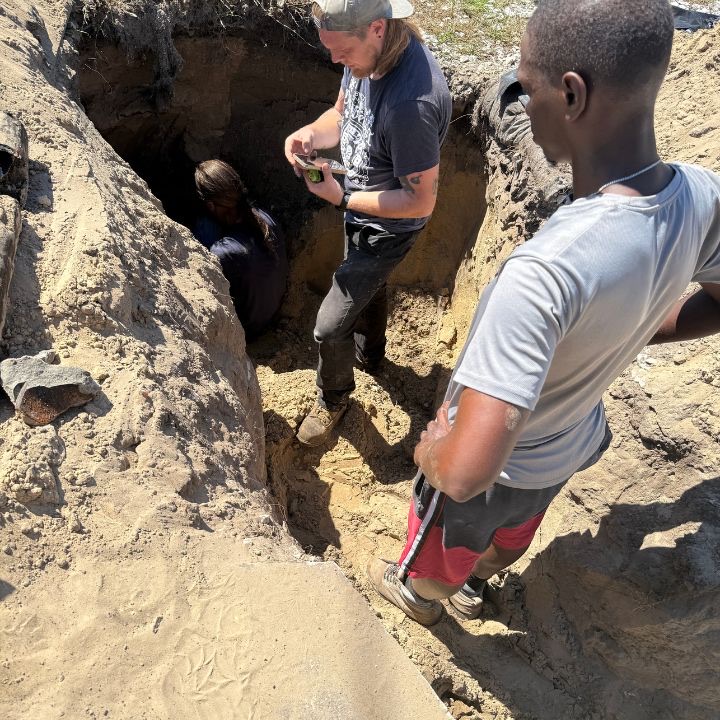
At The Greatful Plumber, we don’t just show up and start tearing into walls. We use specialized equipment to find leaks precisely, which means minimal damage to your home and faster repairs.
Professional Leak Detection Tools
Acoustic Listening Equipment: Ultra-sensitive microphones detect the sound of water escaping from pipes, even through concrete. We can pinpoint under-slab leaks within inches.
Thermal Imaging Cameras: These cameras detect temperature differences invisible to the naked eye. Hot water leaks show up as warm spots, cold water leaks show as cool areas. We can see moisture inside walls without opening them.
Video Inspection Cameras: For drain line leaks or to inspect supply lines, we insert tiny waterproof cameras that show us exactly what’s happening inside your pipes.
Pressure Testing Equipment: We can isolate sections of your plumbing system and test them under pressure to identify exactly where leaks exist.
Moisture Meters: These devices measure moisture content in walls, ceilings, and floors, showing us the extent of water damage even if it’s not visible yet.
What a Professional Leak Detection Visit Looks Like
Step 1: Visual Walkthrough and Interview
We walk through your home and ask questions:
- When did you first notice the problem?
- Where have you seen or heard signs of leaking?
- Has anything changed recently with your plumbing?
- Any renovations or work done near plumbing?
Step 2: Water Meter Test
We verify there’s an active leak by monitoring your water meter with all fixtures off.
Step 3: Fixture and Appliance Inspection
We check all the obvious suspects—toilets, faucets, water heaters, washing machines—to rule out easy fixes first.
Step 4: Pressure and Isolation Testing
If the leak isn’t obvious, we use pressure testing to determine if it’s on the supply side (pressurized lines bringing water in) or the drain side (waste lines).
Step 5: Advanced Detection
This is where the technology comes in. We use acoustic listening, thermal imaging, or camera inspection to pinpoint the exact location of hidden leaks.
Step 6: Repair Plan and Estimate
Once we’ve found the leak, we explain:
- Exactly what’s wrong
- What needs to be repaired or replaced
- The process and timeline
- The cost, clearly and completely
Most of the time, we can locate the leak and complete the repair the same day with zero demolition or minimal, targeted access holes.
Jacksonville Pipe Problems: Know Your Home’s Plumbing
Different areas of Jacksonville were built during different eras with different materials. Knowing what your home has helps predict where problems might appear.
Copper Pipes (1950s-Present)
Pros: Long-lasting, reliable, handles high pressure
Cons: Corrodes in acidic soil or water, can develop pinhole leaks over time, especially in certain Jacksonville neighborhoods
Lifespan: 50-70 years typically
Common in: Most Jacksonville homes built before 2000
CPVC Pipes (1980s-2010s)
Pros: Inexpensive, easy to install, doesn’t corrode
Cons: Becomes brittle with age and heat exposure, prone to cracking at joints, chemical sensitivity
Lifespan: 40-50 years, but often fails sooner in Florida heat
Common in: Homes built in the 1990s-2000s throughout Jacksonville
PEX Pipes (2000s-Present)
Pros: Flexible, resistant to freeze damage, fewer joints mean fewer leak points, chemical resistant
Cons: Can’t be used outdoors (UV damage), some older versions had fitting issues
Lifespan: 40-50+ years expected
Common in: New construction and repiping projects throughout Jacksonville
Galvanized Steel (Pre-1960s)
Pros: Was considered durable when installed
Cons: Rusts from the inside out, clogs with corrosion, leaks are inevitable once corrosion starts
Lifespan: 40-70 years, most are beyond that now
Common in: Riverside, Springfield, San Marco, Avondale historic homes
If you have galvanized pipes: Consider repiping before catastrophic failure. These pipes are living on borrowed time.
Not sure what you have? We can tell you during any service visit, and it helps us predict future issues before they become emergencies.
Preventing the Next Leak
You can’t prevent leaks forever—plumbing systems eventually wear out—but you can dramatically extend their life and catch problems early.
Annual Plumbing Inspections
What we check:
- All visible pipes and connections
- Water heater condition and pressure
- Shut-off valves functionality
- Toilet components and seals
- Faucet condition
- Washing machine supply lines
- Water pressure levels
- Signs of hidden leaks
Why it matters: Most leaks show warning signs before they become obvious. Annual inspections catch these signs early when repairs are simple and cheap.
Maintain Proper Water Pressure
Ideal pressure: 40-60 PSI
Maximum safe pressure: 75 PSI
High pressure causes:
- Stress on pipes and fittings
- Premature fixture wear
- Increased leak risk
How to check: You can buy a pressure gauge at any hardware store for $10. Screw it onto an outdoor faucet and turn on the water.
If pressure is high: Install a pressure-reducing valve. It pays for itself by preventing damage.
Replace Wear Items Regularly
Every 5 years:
- Washing machine supply lines (even if they look fine)
- Toilet supply lines (the flexible line from wall to tank)
- Water heater anode rod inspection (replace if necessary)
Every 10 years:
- Toilet flappers and fill valves
- Faucet cartridges if showing signs of wear
These small investments prevent big problems.
Consider Smart Leak Detection
Modern technology makes leak detection automatic:
Whole-house systems (like Flo or Phyn) monitor your water usage 24/7 and alert you to abnormal patterns. They can even shut off water automatically if a major leak is detected.
Point-of-use sensors (like under-sink detectors) alert you when moisture appears in vulnerable spots.
Cost: $50-$800 depending on system complexity
Value: One prevented under-slab leak pays for the system ten times over
The Backstage Pass Advantage
Our Backstage Pass membership includes annual plumbing inspections, priority scheduling, and discounted repairs. It’s designed specifically for Jacksonville homeowners who want to catch problems early and avoid emergency situations.
Members get leak detection included in their annual visit, plus we create a custom maintenance plan for your home’s specific plumbing system and age.
What It Actually Costs
Leak detection and repair costs vary based on location and severity:
ServiceAverage Cost RangeLeak Detection Service$150-$350Under-Slab Leak Location$350-$600Under-Slab Leak Repair$800-$2,500Wall or Ceiling Leak Repair$250-$900Toilet Flapper Replacement$100-$200Supply Line Replacement$150-$400
Insurance Coverage:
Most homeowners insurance covers “sudden and accidental” damage from leaks but not damage from long-term neglect or wear. Key points:
- Document everything: Photos, invoices, timeline of discovery
- Report promptly: Don’t wait to file a claim
- Keep maintenance records: Shows you maintained your home properly
- Review your policy: Know what’s covered before you need it
The best money spent is the $150-$350 for early leak detection that prevents the $5,000-$15,000 damage bill.
The Bottom Line
Hidden leaks don’t stay hidden forever. They grow, spread, and multiply damage until you’re not just fixing plumbing—you’re replacing floors, treating mold, and reconstructing walls.
The pattern we see constantly:
- Month 1: Leak starts, no visible signs
- Month 3: Water bill is higher, homeowner doesn’t notice or ignores it
- Month 6: Musty smell, soft floor, visible staining
- Month 8: Emergency call, extensive damage, major repair bill
The pattern we want for you:
- Month 1: Leak starts
- Month 2: You catch it during routine inspection or by monitoring your water bill
- Same month: We find it precisely with detection equipment
- Same day: We fix it with minimal invasiveness and cost
The difference between these outcomes? Awareness and early action.
If you suspect something’s off—don’t wait until it’s raining indoors.
Watch your water bill for unusual increases. Check your water meter monthly. Listen to your home. Trust your instincts.
And when something doesn’t seem right, call us before it becomes a disaster.
Suspect a hidden leak? Call The Greatful Plumber at (904) 643-3946 or book online. We’ll find it precisely, explain everything clearly, and fix it right the first time—usually the same day. Serving Jacksonville, St. Augustine, and the entire 904 area with honest answers and repairs that last.
Need a Jacksonville plumber? Learn more about our Water Leak Detection service, or request a quote today.