

Hurricane season in Jacksonville is not just about plywood, batteries, and bottled water. Your plumbing needs a pre-storm check too.
Heavy rain, power outages, floodwater, falling trees, and pressure changes in the water system can all turn a small plumbing issue into a much bigger mess. A weak shutoff valve, a slow main drain, a questionable water heater, or a leak you have been ignoring can become a real problem once the weather turns.
If you only do one thing before the next storm watch, find your main water shutoff and make sure it actually works.
Here is what Jacksonville homeowners should check before storms start lining up in the Atlantic.
Start With Your Main Water Shutoff
If a tree limb damages a supply line, a pipe breaks while you are away, or a fixture starts flooding during a storm, the main water shutoff is the first thing you need to find.
Most homes have two places to check.
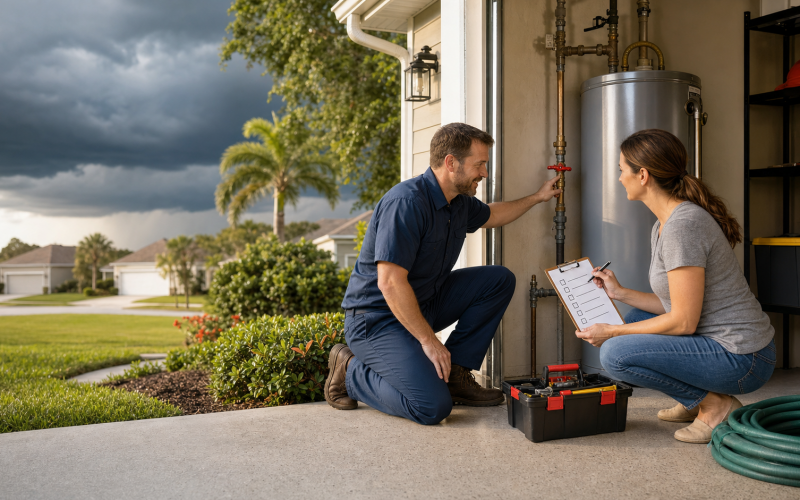
- Inside the house. Look in the garage near the water heater, in a utility closet, or where the main water line enters the home. Many newer homes have a quarter-turn ball valve. Some older homes still have a round gate valve, and those can seize over time.
- At the curb. This is usually in a concrete or plastic meter box near the property line. That is where the utility meter and curb shutoff are located. You may need a meter key to operate it.
Do not wait until the rain is sideways to figure this out. Walk both locations now. Make sure every adult in the house knows where the shutoffs are, how they work, and what to do if water starts moving where it should not.
If the inside valve will not turn, only closes partway, or looks badly corroded, schedule a repair before the next storm watch. That is basic residential plumbing, and it is much easier to handle before the forecast gets serious.
Check for Sewer and Drain Backup Risk
Most people think about water coming through the roof during a storm. Fewer people think about water coming back up through a tub, shower, toilet, or floor drain.
During a heavy storm, Jacksonville’s drainage systems can get overwhelmed. If your sewer lateral already has roots, a belly, a partial clog, or a cracked section, the extra water around the line can make the problem show up fast.
Warning signs to take seriously before hurricane season:
- Multiple drains are slow at the same time
- A toilet gurgles when the washing machine drains
- Water rises in a tub or shower when another fixture runs
- The lowest drain in the house backs up first
- You have had the same drain cleared more than once
A single slow bathroom sink may be a simple local clog. Multiple slow drains or backups usually point deeper in the system.
If you have recurring drain issues, drain cleaning may open the line. If the problem keeps coming back, a sewer camera inspection can show whether roots, offsets, bellies, or damaged pipe are causing the backup.
A drain that keeps coming back is not just annoying. It is your plumbing system giving you a warning before a storm tests the whole line.
Related reading: Why Your Drain Keeps Clogging After You Clear It
Ask About Backflow Protection if You Are in a Low Area
Homes near the St. Johns River, older neighborhoods, low-lying streets, and areas with repeated drainage problems deserve extra attention before storm season.
One question to ask a plumber is whether your home has any backflow protection on the sewer side, and whether additional protection makes sense for your property. A properly selected backwater valve can help prevent wastewater from moving back toward the home in certain situations, but it is not a one-size-fits-all answer.
The right recommendation depends on your home’s plumbing layout, the location of your cleanout, the sewer lateral, local code, and whether the issue is sewer backflow or a different drainage problem.
If your home has had backups during heavy rain, do not guess. Get the line inspected before the next major storm. If the pipe is damaged, sagging, or full of root intrusion, the right answer may involve sewer line repair or replacement.
Related reading: The Pre-Rainy-Season Sewer Check Riverside and San Marco Homeowners Keep Skipping
Protect Your Water Heater
Water heaters take a beating during storm season. They sit in garages, utility rooms, closets, and sometimes low areas where wind-driven rain or floodwater can reach them.
Before a storm, check three things.
- Look at the base. Rust, staining, or signs of past standing water can point to trouble. If the tank is already in rough shape, storm season is a bad time to ignore it.
- Check the shutoff and breaker. Know how to shut off the water supply to the unit. If it is electric, know which breaker controls it. If it is gas, know where the gas shutoff is.
- Make sure the unit is secure. If a tank water heater sits in a garage or flood-prone area, it should be stable and properly supported. A displaced tank can tear supply lines or create safety issues.
After a storm or long power outage, do not ignore new noises, leaks, or water that does not heat normally. Call before you keep using a water heater that may have been exposed to water or electrical issues.
If something looks wrong, schedule water heater repair before it turns into a bigger problem.
Walk Your Outdoor Plumbing
Outdoor plumbing is easy to forget because it is not inside making noise. It still needs a quick storm check.
Before a storm, walk the yard and look at:
- Hose bibs and outdoor faucets
- Irrigation backflow preventers
- Pool equipment and plumbing
- Outdoor showers
- Exposed pipes near exterior walls
- Loose hoses, sprayers, and attachments
Disconnect hoses and bring loose attachments inside. Shut off outdoor fixtures from the indoor valve if your home has one. If a fitting breaks outside during a storm, you do not want a constant feed of water running until someone notices.
If you have irrigation equipment, pool equipment, or exposed plumbing in a spot that takes flying debris, protect it as best you can without creating a hazard. A few minutes outside can prevent a repair call after the storm.
Watch for Leaks Before the Ground Gets Saturated
Storm season can reveal leaks that were already there.
A slow slab leak, a weak water line, or a hidden supply leak may not seem urgent in dry weather. Then the ground saturates, water usage changes, or a storm knocks out your normal routine, and the problem becomes harder to ignore.
Look for these warning signs before the weather gets bad:
- JEA usage is higher than normal
- You hear running water when no fixture is on
- A floor feels warm in one spot
- You smell mildew but cannot find the source
- Paint, baseboards, or flooring show moisture damage
- The water meter moves when everything is turned off
If something feels off, do not wait for the next named storm. Leak detection is much easier when the house is dry, the power is on, and there is time to work through the problem carefully.
If the issue is outside the home or between the meter and the house, you may need water line repair or replacement.
If You Are on Septic, Treat Saturation Seriously
Some Jacksonville-area homes are on septic, especially farther from the urban core. If that is your home, heavy rain changes the picture.
When the ground gets saturated, the drain field cannot absorb water the same way. A system that was already overdue for service can start backing up into tubs, showers, or low fixtures during extended rain.
The Greatful Plumber is not the septic pump-out company. But if you are seeing backups, slow drains, or gurgling fixtures, a plumber can help determine whether the issue appears to be inside the home, in the drain line, or more likely tied to the septic system.
If your septic system is due for pumping or inspection, handle it before peak storm season.
Know What to Do After a Boil-Water Notice
After a major storm, water pressure can drop in parts of the system. When that happens, JEA may issue a precautionary boil-water advisory for affected areas.
If your area is under a boil-water notice, follow JEA guidance first. In general, that means boiling water used for drinking, cooking, brushing teeth, and washing produce until the advisory is lifted.
After the advisory is lifted:
- Flush cold-water taps for several minutes
- Run appliances that use water according to manufacturer guidance
- Replace refrigerator water filters if recommended
- Pay attention to cloudy water, odor, or unusual taste that does not clear
If you are on a private well and floodwater reached the well area, do not assume the water is safe. Follow Florida Department of Health guidance for testing and disinfection.
JEA storm information is available at jea.com/Storm_Center.
The 30-Minute Pre-Storm Plumbing Walkthrough
If you do nothing else this week, do this quick walkthrough.
- Locate and test the main water shutoff inside the house.
- Locate the curbside meter shutoff and confirm you have access to it.
- Check for slow drains, gurgling toilets, or backups at low fixtures.
- Look at the water heater for rust, leaks, or signs of past standing water.
- Confirm you know the water heater breaker or gas shutoff location.
- Walk the yard and disconnect hoses from outdoor faucets.
- Check exposed outdoor plumbing, irrigation equipment, and pool equipment.
- Look at your recent water usage for unexplained spikes.
- Save The Greatful Plumber’s number and JEA’s storm information.
The goal is not to panic. The goal is to find small problems while they are still small.
Frequently Asked Questions
Should I shut off my water before evacuating for a hurricane?
Yes. If you evacuate, shut off the main water supply inside the house. If you are gone for more than a day or you are worried about exterior damage, you may also want to shut off water at the meter. The goal is simple: do not let a broken pipe run for days in an empty house.
What plumbing problems are most common after storms?
Common calls include broken outdoor pipes, water heater issues, clogged or backed-up drains, sewer line problems, hidden leaks, and fixture leaks that started before the storm but became noticeable after.
Does homeowners insurance cover flood damage to plumbing?
Standard homeowners policies usually exclude flood damage. Flood coverage is typically separate. Sudden pipe damage may be handled differently from flood damage, depending on your policy and the cause. Take photos before storm season and ask your insurance agent what your policy actually covers.
Should I use chemical drain cleaner before a storm?
No. If a drain is slow before a storm, chemical cleaner is not the fix. It may damage pipes, sit in a backed-up line, or create a hazard for anyone who has to work on the drain later. If the drain keeps slowing down, have it cleared properly or inspected.
Do I need a sewer camera inspection before hurricane season?
Not every home needs one. But if you have recurring clogs, multiple slow drains, older sewer lines, large trees near the line, or past backups during heavy rain, a camera inspection can show what is going on before the next storm tests the system.
Schedule Plumbing Help Before the Cone Gets Close
The best time to deal with plumbing problems is before a storm is on the map. Once the weather turns, schedules tighten, parts get harder to source, and urgent calls take priority.
If your shutoff valve will not move, your drain keeps backing up, your water heater looks questionable, or your water bill suggests a leak, get it checked now.
Call The Greatful Plumber at (904) 643-3946 or visit tgplumber.com to schedule plumbing service in Jacksonville.