You do not want to discover a grease trap problem on a Friday night.
Not during dinner rush. Not when tickets are already stacked. Not when the dish pit is moving fast and the floor drain starts talking back.
Grease trap and kitchen drain problems usually give you warnings before they turn into a mess. The problem is that busy kitchens are built to keep moving, so little warnings get ignored. A slow sink becomes normal. A bad smell gets blamed on trash. Staff keep plunging the same drain because it seems faster than calling someone.
That is how a plumbing issue turns into lost service time.
The Greatful Plumber helps Jacksonville restaurants and commercial kitchens with the plumbing side of grease trap problems, drain backups, odors, and repeat clogs. No pressure, no upselling. We show up, look at what is happening, explain it in plain English, and help you figure out the next right step.
Grease Trap Problems Usually Start Small
A grease trap is supposed to keep fats, oils, and grease from moving into the wastewater system. When it is working right, it protects your kitchen drains and the sewer line downstream.
When it is not working right, the symptoms can show up all over the kitchen.
Watch for:
- slow drains at prep sinks, dish sinks, or mop sinks
- foul odors near floor drains
- gurgling after a sink empties
- water backing up from a floor drain
- grease, sludge, or food debris showing up where it should not
- fruit flies around drain openings
- staff needing to plunge the same drain again and again
- backups that happen after the kitchen gets busy
One slow drain does not always mean the grease trap is the problem. But repeat warnings should not be treated like normal restaurant life.
If the same area keeps acting up, something is going on.
Why This Turns Into a Bigger Plumbing Problem
Grease does not just rinse away because hot water hits it.
In a commercial kitchen, grease, food particles, soap, starch, and heavy water use all move through the same general work areas. Once grease cools, it can stick to pipe walls and collect more debris. Over time, that buildup narrows the line.
Then the kitchen gets busy.
More dishes. More prep. More rinsing. More water moving through a line that is already struggling.
That is when a slow drain becomes a backup. That is when odors get worse. That is when wastewater can show up on the floor during service.
The EPA notes that sanitary sewer overflows can cause water quality problems, property damage, backups, and public health concerns, and blockages are one of the causes. Restaurants have a real role to play in keeping fats, oils, and grease out of the system.
Locally, JEA requires food service establishments and commercial or institutional kitchens connected to the JEA wastewater system to participate in its Commercial Fats, Oils and Grease Clean-Out Management Program. JEA also requires properly functioning grease traps and maintenance records.
The short version: this is not just a nuisance. It can affect your kitchen, your building, your neighbors, and your ability to keep service moving.
What to Check Every Week
You do not need a complicated system to catch problems early.
Have a manager or lead do a quick weekly walk-through. Do it before the busiest part of the week, not after something already failed.
Check:
- dish area floor drains
- three-compartment sink drainage
- prep sink drainage
- mop sink drainage
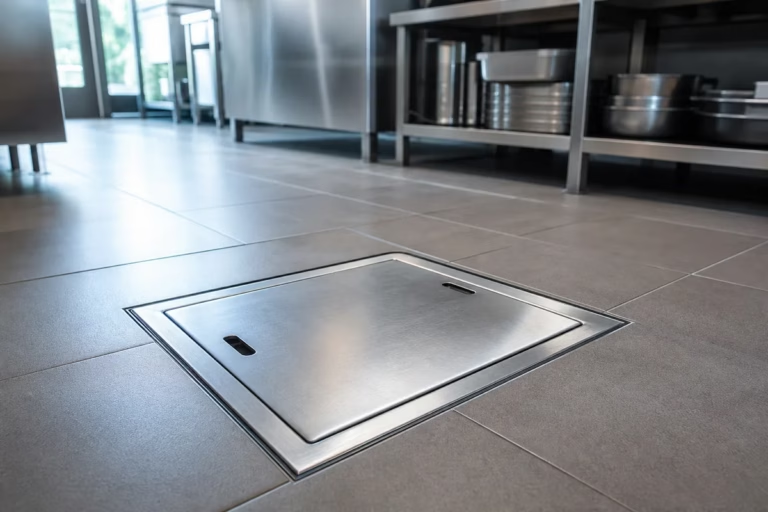
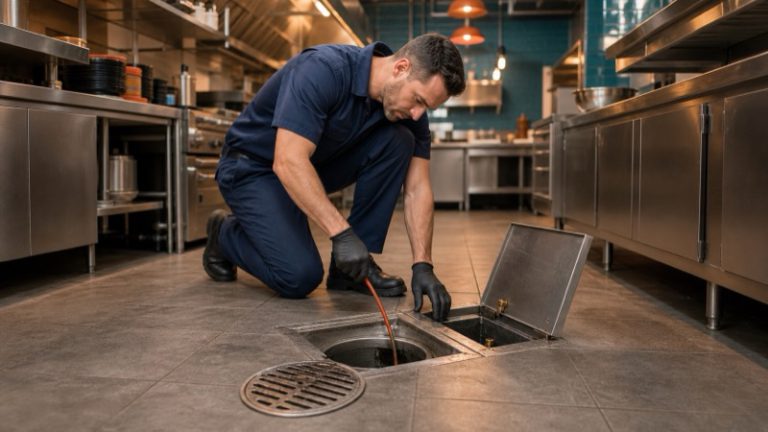
- grease trap access area
- odors near drains
- any drain staff have been babying
- recent pump-out or service documentation
Ask simple questions:
- Did any drain slow down this week?
- Did anything back up, even once?
- Did anyone have to plunge a drain?
- Did the smell get worse near the dish area?
- Did the last grease service happen on schedule?
If staff know you want the small stuff reported, they are more likely to tell you before it becomes a shutdown problem.
What to Document
Good notes help everybody.
They help the manager spot patterns. They help the plumber diagnose the issue faster. They help ownership understand why a repeat problem needs more than another quick clearing.
Track:
- last grease trap cleaning date
- hauler or service provider name
- pump-out reports or service tickets
- slow drain reports
- backup events
- odor complaints
- photos of problem areas
- any menu, volume, or equipment changes
- whether the problem happens during peak service or all the time
JEA says pump-out reports must be submitted no more than five business days after cleaning. Certified Haulers handle required reports and maintenance records, but the kitchen should still keep its own copies.
If you cannot find your records, start there.
When to Call a Plumber
Call before the drain becomes a floor problem.
A plumber should look at the system when:
- the same drain keeps slowing down
- more than one kitchen drain is affected
- odors do not go away after cleaning
- a floor drain backs up
- water backs up after the grease trap was serviced
- you are not sure whether the issue is the trap, the line, or the fixture
- staff are using plungers as part of the normal routine
Grease trap service and drain cleaning are related, but they are not the same job. A hauler may clean the trap while the drain line still has buildup. A plumber may clear the line but also see that trap maintenance needs to be coordinated.
That is why guessing gets expensive.
The Greatful Plumber can help with drain cleaning and commercial plumbing diagnosis. If the issue points back to grease trap cleaning records, trap sizing, or hauler coordination, we can help you sort out the plumbing side and point you in the right direction.
Do Not Wait for the Health Inspection
Florida Department of Health food safety inspections are risk-based. Inspection frequency can depend on the type of food, how it is prepared, the population served, and the amount prepared. High risk facilities may be inspected quarterly, moderate risk semiannually, and low risk once per year.
That means plumbing problems should not wait for an inspector to notice them.
If there is wastewater on the floor, odors near customers, or a drain problem staff keeps working around, you already have enough reason to act.
How The Greatful Plumber Helps
We are not here to scare you or sell you a bunch of things you do not need.
We help restaurant owners, kitchen managers, and facilities managers figure out what is actually happening:
- Is this a local drain clog?
- Is the line downstream holding grease?
- Is the grease trap service schedule falling behind?
- Is more than one fixture affected?
- Is this a one-time problem or a repeat-site issue?
Then we explain the options in plain English.
If your Jacksonville kitchen is seeing slow drains, odors, or backups, schedule commercial drain cleaning or contact The Greatful Plumber before the rush makes the decision for you.
FAQ
Is every slow restaurant drain a grease trap problem?
No. A slow drain can come from a local clog, food debris, pipe buildup, a fixture issue, or the grease trap. If the same problem keeps coming back or several drains are affected, it needs a closer look.
How often should a Jacksonville restaurant grease trap be cleaned?
Follow the schedule required for your trap or interceptor, keep copies of service records, and do not wait until the drains smell bad or slow down. If you are not sure whether the issue is the trap, the drain line, or both, call before it turns into a service disruption.
Can TGP pump out a grease trap?
This post is focused on the plumbing side: drain backups, odors, line problems, diagnosis, and coordination. If cleaning records or hauler service are part of the issue, we can help you understand what is happening and coordinate the next step.
When should a kitchen call instead of waiting?
Call when water backs up, odors are getting worse, multiple drains are slow, or staff keep dealing with the same drain. If it can interrupt service, do not wait.
Kitchen Drains Acting Up Before a Busy Shift?
Slow drains, odors, and floor drain backups can turn into real downtime. Get the plumbing side checked before the rush makes the decision for you.