Grease trap problems do not usually start with a dramatic backup.
They start with little warnings.
A floor drain smells worse than normal. The three-compartment sink drains slower at closing time. Staff notice fruit flies near the dish area. Someone says the mop sink “has been weird lately.” Then the kitchen gets busy, the line is moving, and nobody wants to stop service to talk about plumbing.
That is how commercial drain problems get expensive.
For Jacksonville restaurants, cafes, bars, food trucks with commissary kitchens, churches, schools, and commercial kitchens, grease management is not optional background maintenance. It is part of keeping the business open.
The Greatful Plumber handles commercial plumbing in Jacksonville and helps food businesses deal with the plumbing side of grease, drains, and kitchen backups. This guide is not legal advice and it is not a replacement for local code requirements. It is a practical field guide for knowing when your grease trap or kitchen drain system needs attention.
Why Grease Traps Matter
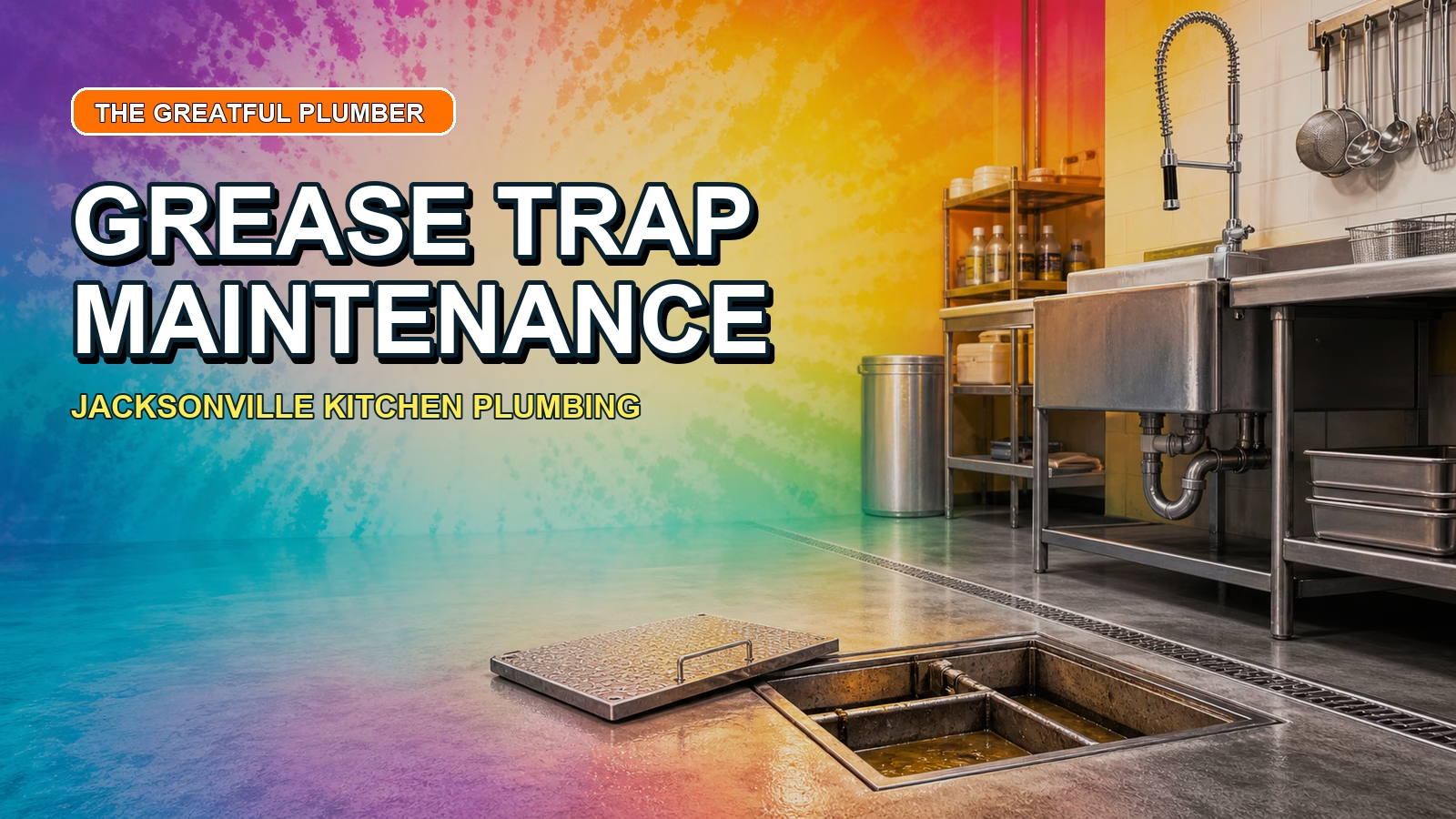
Grease traps and grease interceptors are designed to keep fats, oils, and grease out of the public sewer system.
That matters because grease does not behave like water.
Hot grease can look harmless when it leaves a pan. Once it cools, it can stick to pipe walls, collect food particles, and narrow the drain line over time. In a commercial kitchen, that buildup can happen faster because the volume is higher and the drains work harder.
The EPA gives homeowners similar advice for septic and drain care: do not pour cooking grease or oil down the drain, and avoid sending coffee grounds, food waste, wipes, and other problem materials into the system. That same idea matters even more in a commercial kitchen because the scale is bigger.
A properly maintained grease trap helps protect:
- kitchen drain lines
- floor drains
- dishwasher and prep sink drainage
- downstream sewer lines
- the public wastewater system
- your ability to keep the kitchen running
If the trap is ignored, it can become the problem instead of the protection.
Grease Trap vs. Kitchen Drain Clog
Not every slow kitchen drain is a grease trap problem.
Sometimes the issue is a local clog in a sink line. Sometimes food debris is sitting in a trap. Sometimes the floor drain has buildup. Sometimes the grease interceptor is overloaded. Sometimes the line downstream from the trap is partially blocked.
That is why guessing gets expensive.
If your kitchen sink is slow once, it may be a simple drain issue. If several kitchen drains are slow, odors are coming from floor drains, or grease is showing up where it should not be, the system needs a closer look.
TGP already has a broader guide to Jacksonville grease trap laws and property owner responsibilities. This post is the practical side: what owners and managers should watch for before the kitchen gets forced into emergency mode.
Warning Signs Your Grease Trap Needs Attention
The earlier you catch grease-trap problems, the easier they usually are to manage.
Watch for these signs:
- slow drainage at prep sinks or dish sinks
- foul odors near floor drains or the dish area
- fruit flies or pests around drain openings
- grease or sludge visible near drains
- gurgling sounds when sinks empty
- water backing up from a floor drain
- staff needing to plunge or baby the same drain repeatedly
- cleaning schedule falling behind during busy weeks
One warning sign does not always mean the grease trap is failing. But repeated warning signs are the plumbing system telling you something is off.
Do not wait until a dinner rush to find out.
If a drain is already backing up, schedule professional drain cleaning in Jacksonville or call The Greatful Plumber at (904) 643-3946.
Why Restaurants in Jacksonville Need a Routine
Jacksonville food businesses deal with a mix of high volume, older buildings, tight kitchens, busy weekends, and seasonal surges.
A Riverside restaurant in an older building does not have the same plumbing setup as a newer quick-service space on the Southside. A small cafe does not produce grease like a heavy-fry kitchen. A bar with a limited menu has different usage than a full-service restaurant with constant dishwashing.
That is why maintenance should match the actual kitchen.
The right schedule depends on:
- how much grease the kitchen produces
- trap or interceptor size
- number of sinks and fixtures connected
- service volume
- menu type
- dishwasher usage
- previous backup history
- local inspection or documentation needs
The answer is not “set it once and forget it.” The answer is to monitor the system, keep records, and adjust when the business changes.
If you are opening a new kitchen, changing your menu, increasing hours, or adding equipment, your old grease schedule may no longer fit.
Staff Habits Matter
Even a good grease trap can be overwhelmed by bad kitchen habits.
The trap is there to intercept grease. It is not there to excuse pouring everything down the drain.
Simple staff habits make a difference:
- scrape plates before rinsing
- dry-wipe greasy pans before washing
- keep food scraps out of prep sinks
- use strainers where appropriate
- never pour fryer oil into sinks or floor drains
- report slow drains early
- keep the grease-trap area accessible
- document service dates and plumbing issues
These are boring habits.
Boring habits keep kitchens open.
If staff only report a problem after wastewater is on the floor, the business has already lost time.
What Restaurant Managers Should Document
Grease trap maintenance gets easier when managers keep simple records.
You do not need a complicated system. You need enough information to see patterns before they become emergencies.
Track:
- last grease trap service date
- who performed the service
- slow drains reported by staff
- odors near sinks or floor drains
- backups or overflow events
- menu or volume changes
- new equipment tied into the drain system
- photos of problem areas when something looks off
That record helps the plumber understand what changed. It also helps managers train staff, plan service around busy periods, and avoid the “nobody told me” problem.
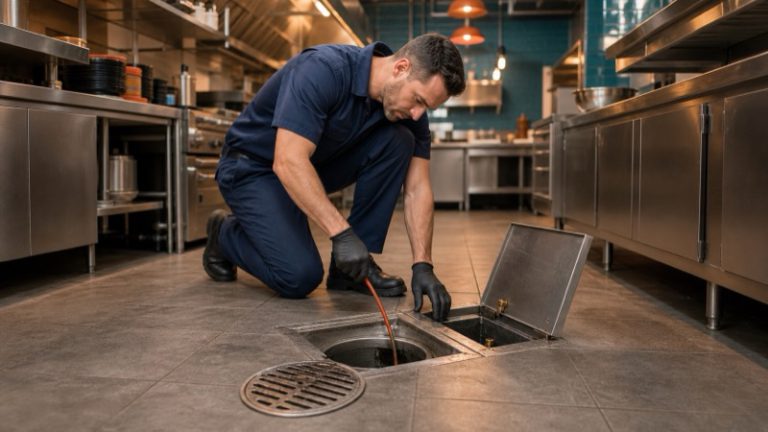
Before a holiday weekend, event night, football rush, or big catering push, do a quick walk-through. Check the dish area, prep sinks, floor drains, mop sink, and grease-trap access. If something smells wrong or drains slowly before the rush starts, call before the kitchen is under pressure.
When Drain Cleaning Is Part of the Fix
Grease trap service and drain cleaning are related, but they are not the same thing.
A trap may be cleaned properly while the drain line downstream still has grease buildup. Or a kitchen drain may clog even though the trap itself is not full. In some cases, the line needs professional clearing or more thorough cleaning to restore proper flow.
That is where a plumber can help diagnose the system instead of treating every symptom like the same problem.
Professional drain cleaning may be needed if:
- water backs up after the trap has been serviced
- the same kitchen drain slows down repeatedly
- more than one drain is affected
- grease buildup is suspected in the line
- the problem returns quickly after a temporary clearing
- there are odors even after routine cleaning
For heavy buildup, the plumber may recommend a stronger cleaning method. For repeated backups, a camera inspection may make sense so the line can be evaluated instead of cleared blindly.
What Not to Do
Do not pour chemical drain cleaner into a commercial kitchen drain and hope for the best.
Chemical drain cleaners can fail to clear the real problem, sit in the line, create safety issues for anyone working on the drain, and damage some plumbing materials. They also do not fix a grease trap that needs service or a line that needs professional cleaning.
Do not ignore odors.
Do not assume staff are reporting every slow drain.
Do not wait for the health inspector, landlord, or customers to notice the problem before you deal with it.
Commercial plumbing problems rarely get cheaper because everyone waited.
Grease Trap Content Is Mostly Commercial
One important caveat: grease-trap maintenance is mostly a commercial topic.
Most homeowners do not need a commercial grease trap. Homeowners do need better grease habits in the kitchen, and TGP has a separate guide on how to keep kitchen drains clean.
For restaurants and food businesses, the stakes are different.
If your grease trap or kitchen drain system fails, it can affect service, staff safety, sanitation, customers, inspections, and revenue. That is why this belongs on a maintenance calendar, not a panic list.
When to Call The Greatful Plumber
Call a plumber when the kitchen starts giving you repeat warnings.
Slow drains, foul odors, gurgling, floor drain backups, and grease-related clogs should not become normal. If you are managing a restaurant or commercial kitchen in Jacksonville or Duval County, The Greatful Plumber can help you figure out whether the issue is the trap, the drain line, the fixtures, or the plumbing downstream.
For commercial kitchen drain issues, schedule Jacksonville drain cleaning or call The Greatful Plumber at (904) 643-3946.
If you need broader support for a food-service property, review TGP’s commercial plumbing services and keep your kitchen from finding out the hard way.
Kitchen drains acting up?
Slow kitchen drains, floor drain odors, and repeat backups can turn into real downtime. Schedule Jacksonville drain cleaning with The Greatful Plumber and get the problem checked before service gets interrupted.
Prefer to call? 904-643-3946